> For the complete documentation index, see [llms.txt](https://4sh-templates.gitbook.io/opulent-os2.0/llms.txt). Markdown versions of documentation pages are available by appending `.md` to page URLs; this page is available as [Markdown](https://4sh-templates.gitbook.io/opulent-os2.0/blog-posts.md).
# Blog Posts
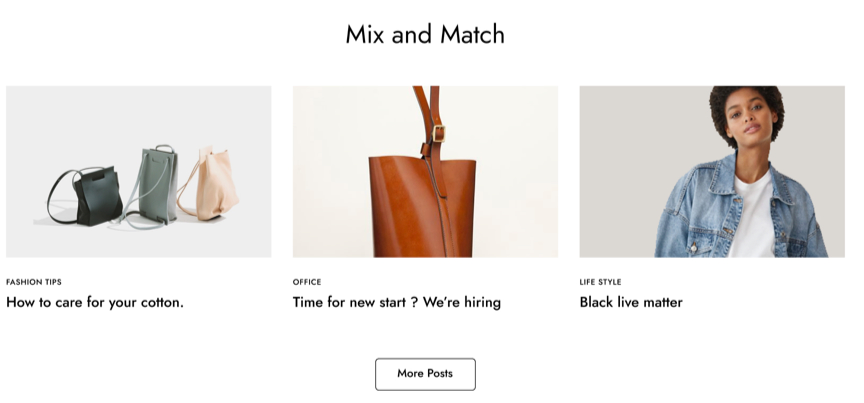
The blog post section is useful when you want to show new product launches, tips, or other news.
{% hint style="success" %}
Steps
1. In the theme editor **(Customize)**, click **Add section**
2. Locate **Blog posts**
3. **Save**
{% endhint %}
To know more about how to add a blog to your online store.
This article shows you how to display your blog posts on your website using **Opulent** theme.
## Section header and general
Utilize the designated text fields to input an appropriate heading, subheading, and description. If you prefer not to display any of them, leave the respective field blank.
Customize the text alignment (left/center), background color, and container type as needed.
## Content
This section allows you to feature your preferred blog posts. Utilize the slider to adjust the number of blog posts per row and the total number of displayed posts (between 2 and 12).
Furthermore, you can modify the gap between each post within this section.
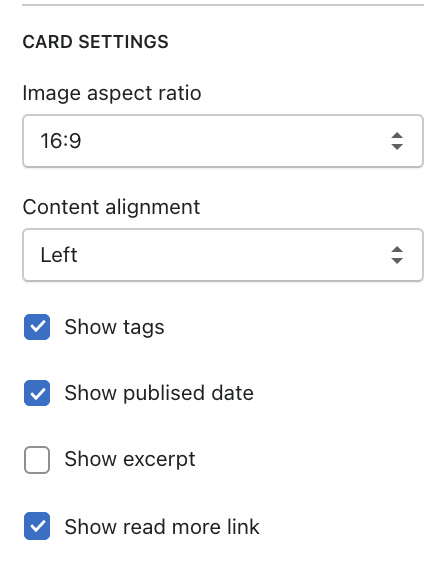
The card section allows you to customize the blog image ratio and adjust content alignment within each card. Additionally, you have the option to enable or disable various card elements:
* Show tags: Display relevant tags of the blog post
* Show published date: Display the date the blog post was issued
* Show excerpt: Display a short summary of the blog post
* Show read more link: Provide a link for customers to access the full blog post